
Posted By Jessica Rosen on Oct 14, 2026


At this year’s Climate Week NYC, food waste was decidedly on the agenda.
As a nexus issue and a Sustainable Development Goal target, it makes sense that it would be, but this wasn’t always the case for food waste, or food systems in general.
It wasn’t until COP27 in 2022 - the annual UN Framework Convention on Climate Change’s Conference of the Parties where international negotiations such as the Paris Agreement occur - that food systems were formally included. (That’s 27 years after they began!)
Food waste is responsible for 8-10% of greenhouse gases (GHGs) - 5x the emissions from the aviation sector. It wastes one-quarter of all freshwater and fertilizer used in agriculture and a land area the size of China. Almost a quarter (24%) of the world’s edible calories are wasted, while more than a quarter (25.8%) of people experience moderate or severe food insecurity. All in all, food loss and waste costs the world more than $1 trillion.
That’s why, over a decade ago, the UN, individual countries, and businesses aligned on the need to cut food waste in half by 2030 via SDG Target 12.3 (or another locally branded name) - for the sake of the climate, food security, and natural resources.
Despite the increased awareness, investment, and innovation over the last decade, the latest SDG 12.3 progress report shows the world is not on track to meet this critical goal. So why are we falling short? Part of the opportunity gap is not enough focus on prevention and optimizing for triple bottom line impact - environmental, social, and economic.
While any diversion of food away from landfill is beneficial, the food waste hierarchy (aka the Wasted Food Scale in the US) says that source reduction or prevention is the most preferred because it has the biggest ROI environmentally and financially. That’s why Leanpath works on measurement and prevention. As the adage goes, “you can’t manage what you don’t measure” – without good data and insights, opportunities to prevent food from being wasted are left on the table.
An immersive experience
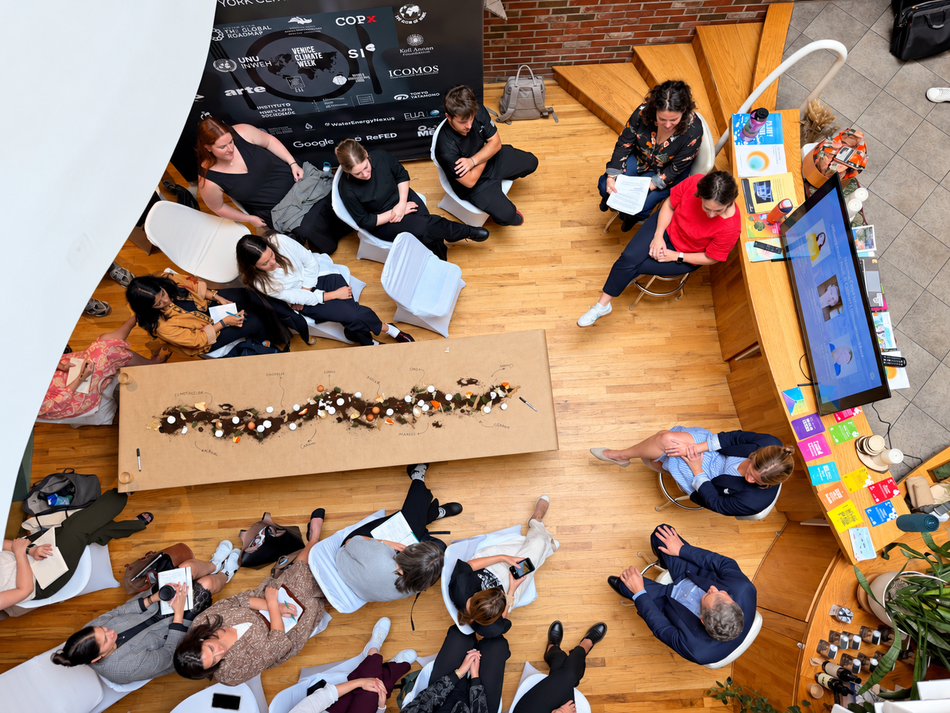
At this year’s Climate Week, we wanted to do something different. Given the intention-impact gap, we wanted to showcase food waste tracking and prevention success stories and create a more intimate setting where attendees could interact with one another to not only hear about but experience what it looks and tastes like. By putting chefs and food at the center of our gathering, we aimed to make the act of reducing food waste in foodservice tangible, to demonstrate why measurement and prevention work, and to inspire others to set their own ambitious goals.
In partnership with the Future Food Institute, Google, and ReFED, we brought executives and chefs from our respective organizations together for “Halving Food Waste: Where Food, Tech, and Culinary Innovation Meet” - a panel discussion, followed by a food waste tracking demo and a repurposed food tasting as part of Future Food Institute’s Convivium programming at Climate Week.
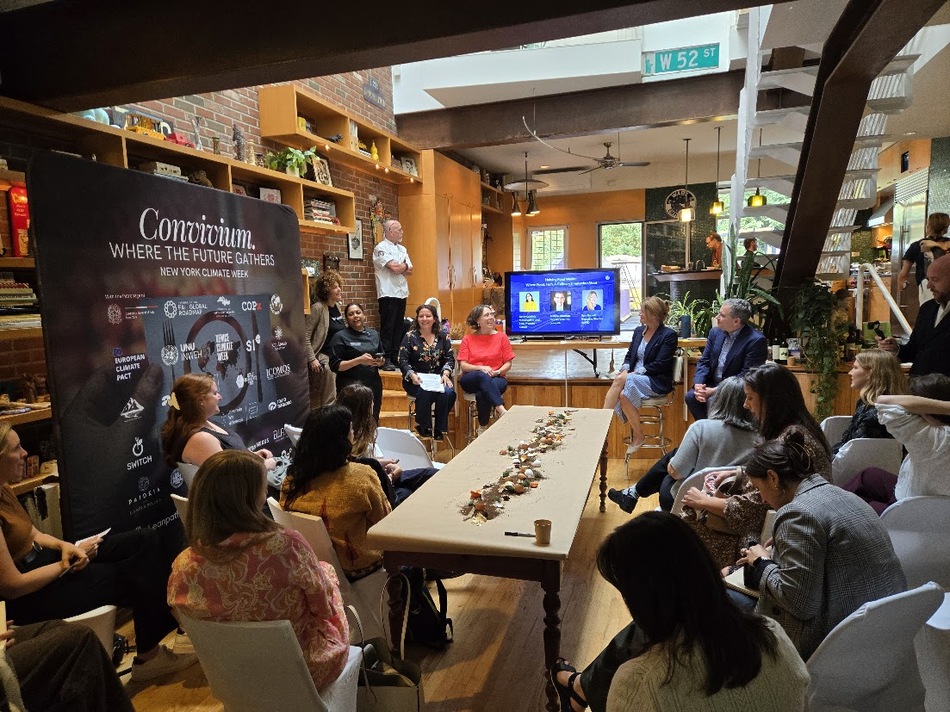
Our longtime partners at Google were the featured success story, having recently achieved an impressive 56% food waste reduction per Googler using Leanpath (see our newly published case study). Global Sustainability Lead for the food program at Google, Kathy Cacciola, talked about some of the ways they not only achieved but exceeded their ambitious 50% reduction goal while still balancing the guest experience. These included just-in-time cooking, right-sized service, and trim repurposing.
Putting this in the context of the bigger picture, ReFED’s Executive Director Sara Burnett shared the positive news that food loss and waste has been made a priority at the upcoming COP31 in November. And in the US, data shows a decrease in food waste per capita for the first time since the COVID-19 pandemic. While incremental, it’s a trend in the right direction.
Leanpath Founder and CEO Andrew Shakman emphasized the importance of hard-wiring food waste prevention into operations. Our mission, after all, is to “make food waste prevention everyday practice in the world’s kitchens.”

Sara Burnett emphasized the importance of financially viable solutions and of tackling the highest impact opportunities first, rather than low-hanging fruit. Unfortunately, it’s common for perfectly edible food to be composted instead of repurposed or donated, which goes against the hierarchy. With over 70 solutions across the spectrum of prevention, recovery, and recycling in ReFED’s Solutions Database, the majority of the solutions and their financial benefit fall under prevention. Waste tracking - as Google has proven - is among the five solutions with the highest financial ROI.
One of the things that has worked for Google is site- and regional-level goals in addition to the roll-up global goal, according to Kathy Cacciola. Each location can target its food waste reduction activities accordingly based on what they’re wasting, how much, and why. These granular, integrated data and insights paired with locally appropriate solutions helped enable their success. Andrew Shakman chimed in that this goal-sharing helped create community across the organization, kept the program fun and gamified through things like Zero Waste Dish competitions, and scaled winning solutions across the enterprise, giving visibility to internal changemakers and accelerating impact.
“Chefs and culinary teams are really the changemakers.” - Chef Robb White, Leanpath
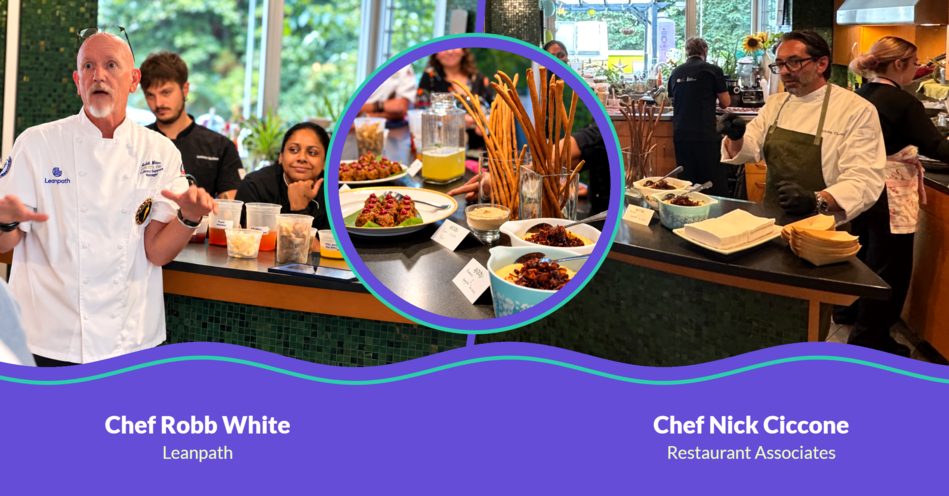
After the panel, the group moved to the kitchen where Chef Robb White from Leanpath, Chef Nick Ciccone from Restaurant Associates (part of Compass Group and one of Google’s foodservice providers), and Chef Sandhya Kumar from Future Food Institute demonstrated how to track and prevent food waste with Leanpath and how to use the data, insights, and culinary creativity to repurpose food into delicious, nutritious, sustainable small bites. Everyone agreed that chefs inherently don’t want to waste food - they’re in it for the love of food.
Getting kitchens to track their food waste and getting useful and accessible data such as the loss reason helps chefs make informed decisions to reduce waste, according to Leanpath’s Chef Robb. The fix for overproduction is different from the fix for spoilage. Chef Nick told everyone how he was “a convert” and “a believer” after adopting our tracking system, giving his team visibility into the food being wasted, and incentivizing them to innovate, which is one of the reasons why many of them became chefs in the first place.
Bringing everything full circle back to the food at the heart of it all, Chef Sandhya served us delectable bites made from repurposed ingredients that otherwise would have gone to waste. This included broccoli stem falafels, banana peel meatballs, beer flour breadsticks with fermented carrot peel hummus, and juice shots made from hydrolyzed fruit and veggie peels. Yum!
Thanks to everyone who joined us - we hope you had as much fun as we did!
Elsewhere around town at Climate Week
Our friends at Food Tank gave food waste a prime-time slot Monday morning with “Solving Food Waste - A Key Solution to the Climate Crisis”, which “put food waste at the center of the climate conversation”, according to the UN Environment Programme’s Climate Change Division Director Martin Krause, who opened the event. Five of the most influential food waste NGOs - ReFED, WRI, WRAP, WWF, and The Global Foodbanking Network - teamed up to co-host “Food Waste: The Climate Opportunity on Our Plate” on Wednesday. Our top 10 takeaways:
- Food waste is a uniquely tangible, bipartisan, triple bottom line issue with known solutions.
- We need to get more out of the food we already produce. The world depends on it.
- We need to train the next generation of conscious culinary leaders operating at the intersection of culinary creativity, technology, consumer behavior change, and sustainability.
- Data enables the choice about what actions to take to reduce waste.
- The science is established and we have momentum, but progress isn’t happening at the pace we need. We need to focus on implementing solutions and maximizing the efforts that already exist. Accelerate, expand, scale, and replicate.
- De-risk and leapfrog by learning from existing programs and pilots - it’s not always necessary to pilot or start small when we have proven solutions that work. Avoid pilot fatigue and incremental impact, which can have unintended consequences. Action builds momentum. (For examples of companies that have achieved >30% reduction in food loss and waste, check out the latest Champions 12.3 Progress Report.)
- Different communication is needed for different audiences. With broader audiences, it’s more effective to frame reducing waste as a business imperative, not a sustainability one.
- To quantify the business case, look at the food efficiency ratio, the value of waste avoided, and the food costs before and after interventions.
- Reducing food waste leads to higher profit margins. For example, consumers want reduced portion sizes, but businesses don’t necessarily have to cut prices proportionally.
- A supporting foundation - such as infrastructure/market readiness, enforcement, funding for solution providers - is key for policies and programs to be successful.
A call to action
We left Climate Week feeling affirmed, inspired, and energized (and OK, a little tired). The momentum hasn’t stopped. Since then, we’ve celebrated Food Waste Prevention Week and the International Day of Awareness of Food Loss and Waste. COP31 is just under a month away. The SDG deadline is four years away. Beyond sustainability, the business case for food waste prevention is also clear. We have solutions that work. Now is the time to prioritize prevention-first approaches, act, and scale.
With the recent food waste call to action made by NGOs at London Climate Action Week, now is the time to recommit to the highest impact solutions to cut food waste in half by 2030.