
Posted By Leanpath on Oct 29, 2026


In 2022, Google made a public commitment that caught the attention of the entire foodservice industry: cut food waste per Googler in half by the end of 2025, measured against a 2019 baseline.
Google exceeded that goal. Its 2026 Environmental Report confirmed a 56% reduction in food waste per Googler, alongside an 84% landfill diversion rate.
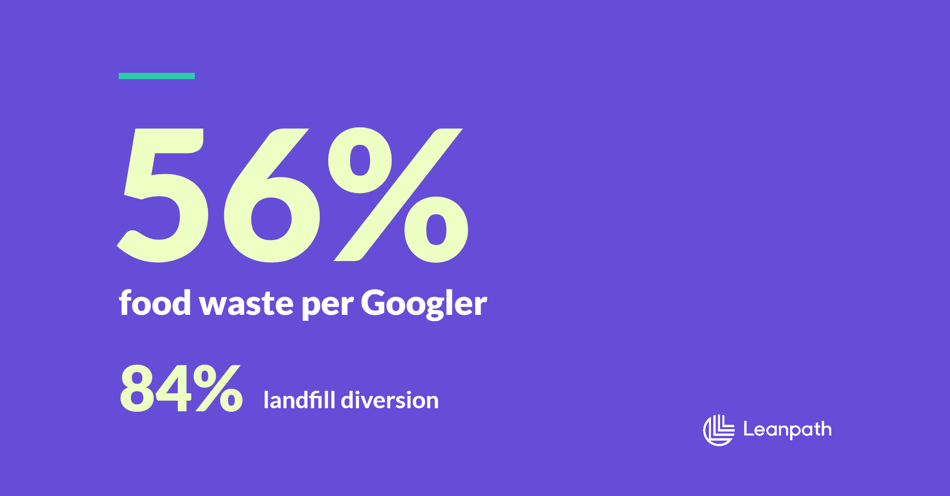
- 56% reduction in food waste per Googler versus the 2019 baseline
- 84% landfill diversion, roughly three times the U.S. national average
- Hundreds of cafes in 150+ cities across more than 50 countries
We shared the result in July. Our new case study explains how Google did it, working with a network of foodservice partners and thousands of associates to put one global goal into practice in every kitchen. The program had four main parts.
The Challenge: Cut Waste in Half Without Touching the Dining Experience
Google's food program is one of the most recognized employee food programs in the world, and Googlers expect it to be excellent.
That set a clear constraint from the start: no smaller menus, no depleted stations and no guilt-driven messaging at the dish drop.
"We can't manage what we don't measure," says Kathy Cacciola, Global Sustainability Lead for the food program at Google. "Individually, the practices that prevent food waste are not complicated. The hard part is getting everyone, everywhere, doing the easy stuff every day: the small food waste best practices that add up to big changes."
A Public, Per-Person Ambition
Google measured waste per Googler rather than in total. That adjusted for changes in headcount and hybrid attendance, so the 2019 baseline stayed valid after the pandemic and progress reflected changes in the kitchen rather than changes in office occupancy.
A companion landfill-diversion goal made sure that waste that couldn't be prevented was donated or composted rather than sent to landfill.
Announcing the goal publicly also created accountability. "When the ambition is public, you have to get your processes right," says Anita Padman, Food Program Manager at Google, who manages foodservice operations across EMEA. "There is no quietly moving the goalposts later."
It also gave a network of vendor partners, each with its own culture, contracts and priorities, one number to work toward and a shared way to talk about it. "The public ambition gave us the operational clarity we needed," says Michael Kann, Global Culinary Strategy & Development Lead at Google. "It aligned teams everywhere so we could focus on execution rather than re-establishing the vision at every kitchen."
A Data Backbone From Day One
Google's kitchens were already tracking waste with Leanpath in 2019, so the company had a credible baseline and could measure progress from the day the goal was announced.
Each foodservice partner then set its own baseline and named its single biggest opportunity. For one operator, that was overproduction at the salad station. For another, it was finding new uses for surplus ingredients.
Every entry was tagged with a loss reason (trim, overproduction, expired, equipment failure) and a disposition (donation, compost, digester, trash). The data rolled up regionally and globally, so leaders could see which regions were on pace and where to send support.
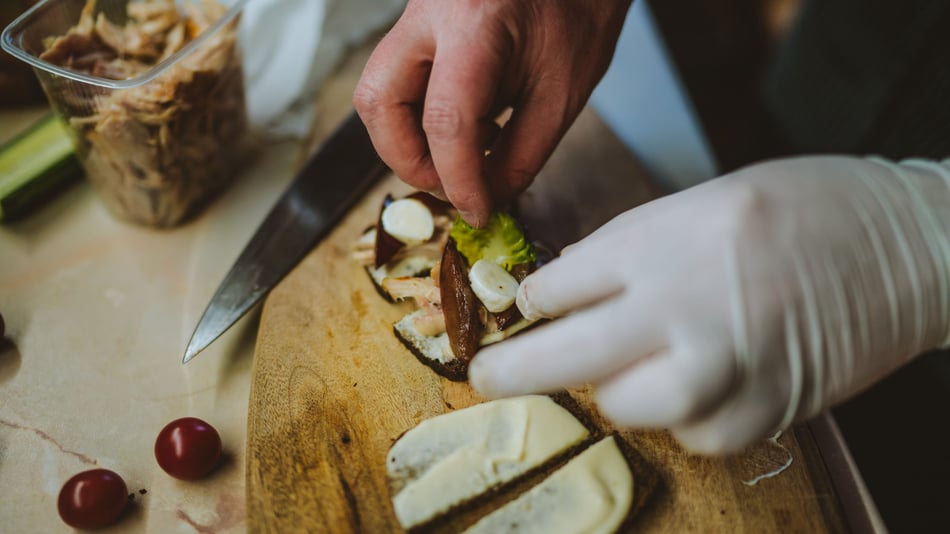
Photos of each waste entry helped teams find the cause and respond:
- Avoidable trim led to knife-skills refresher training. (Our guide to auditing trim waste covers how to do this in your own kitchen.)
- Plate waste that kept pointing to the same dish led to recipe changes.
- Audit reports flagged sites where tracking had dropped off, so program managers could retrain those teams quickly.
A Governance Rhythm That Spreads What Works
To keep every region moving and share what worked, Google's program runs on a fixed schedule:
- Bi-weekly: A global food sustainability working group brings together vendor sustainability leads, regional food program managers and Leanpath. Practices that work in one country are adopted in others.
- Weekly: A message goes to every food team with a clear call to action and supporting resources.
- Quarterly: Leadership reviews set the expectation to exceed the goal, not just meet it. Vendor partners are represented at a senior level.
Site-level champions support this schedule. They review the data weekly for accuracy, set targets, train front-line staff, and share solutions with peers at other sites.
Food program managers sit between the global program and the daily kitchen. They manage vendor partners across regions and turn global goals into local targets.
Lead With Flavor
Google didn't ask cooks, chefs and station attendants to care about waste for its own sake.
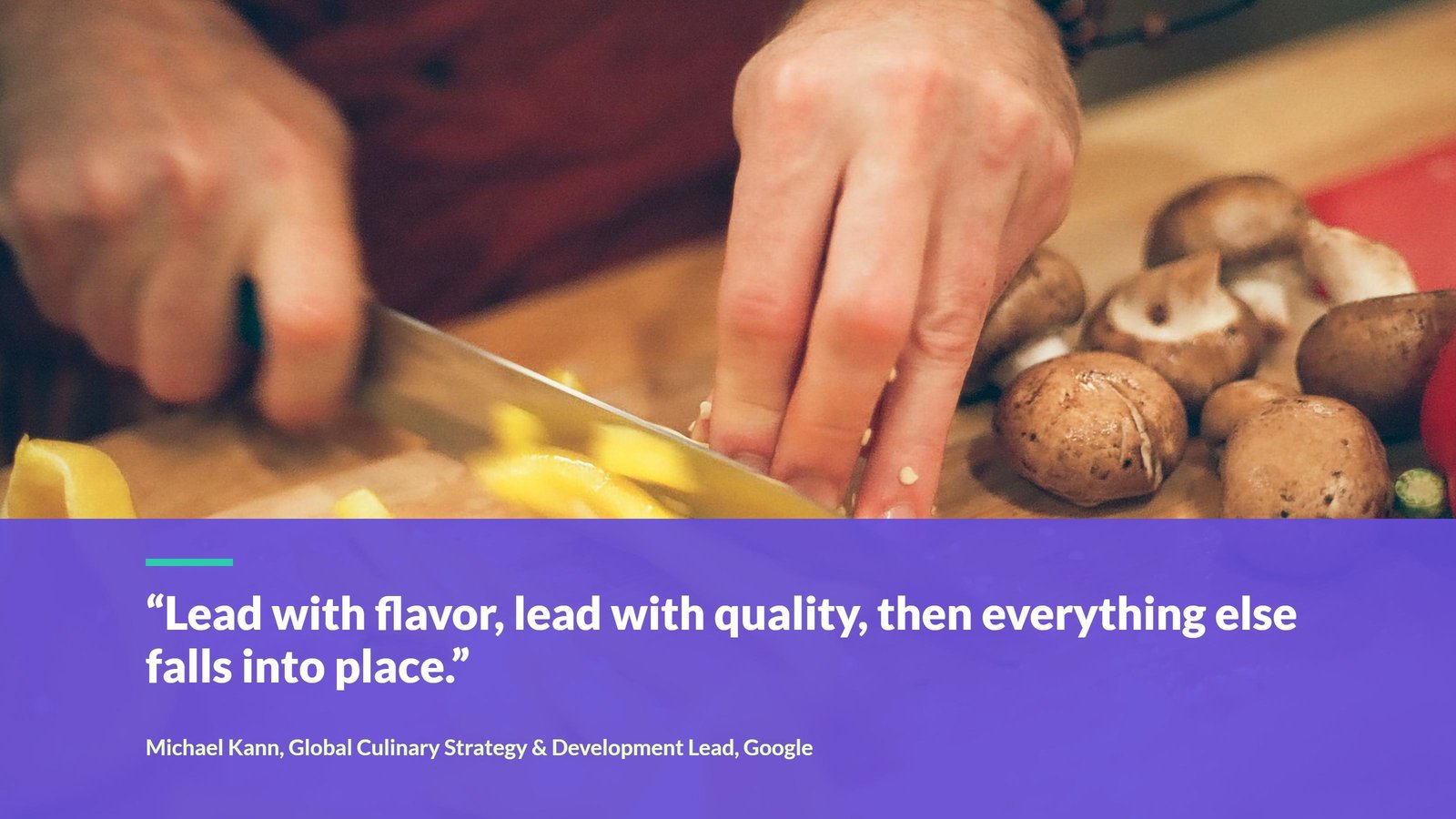
"Lead with flavor, lead with quality, then everything else falls into place," says Kann. Hourly culinary staff are motivated by putting great food in front of people, not by cost-of-goods percentages or carbon metrics, so Google treated waste prevention as part of food quality.
- Just-in-time cooking: Kitchens moved from cooking a full service period's worth of food at once to small batches on 15- to 30-minute cycles. Diners got fresher eggs, hotter fish and fuller-looking stations, and kitchens overproduced far less.
- Regionalized menus: Menus built around local tastes replaced a one-size-fits-all template, most visibly at breakfast. Satisfaction went up while food waste went down.
- Right-sized service: Smaller, shallower pans, refilled more often, kept stations looking full with less food. Pan sizes get smaller as service winds down.
- Small tools, global standards: Better trim tools improved yield and consistency, and recipe-testing standards were designed for real production kitchens.
Google's operations guide makes these practices vendor partner responsibilities. The guide also covers catering quantities based on expected attendance, buying imperfect and upcycled products, repurposing trim, and keeping post-production records to plan future menus.
Protecting the Diner Experience
The diner experience was non-negotiable. Instead of messaging that made diners feel guilty, Google used right-sized plates, bowls and serving utensils, a "take what you need, come back for more" message, and seasonal campaigns rather than year-round signage.
The program also kept things fun. Zero Waste Dish competitions challenged countries and vendor partners to turn watermelon rinds, pineapple peels and vegetable trim into featured cafe recipes. The best ideas were shared across the program. For example, one partner's produce storage guides were rolled out to every vendor partner.
What's Next: From Initiative to Operating Standard
Now that the goal has been met, Google is treating waste prevention as part of standard operations rather than a sustainability initiative. It's built into the operations guide, routine site reviews, vendor SOPs, onboarding and ongoing training.
"Don't run food waste as a side project," says Padman. "Build it into how the operation runs, or it will evaporate when attention moves on."
Ongoing measurement is what keeps the gains from slipping. Without tracking, waste can creep back up without anyone noticing. Google's sites continue to set operational targets, with new AI capabilities in Leanpath making data capture and analysis faster.
Six Takeaways for Any Food Program
Whether you run one kitchen or hundreds, the same approach applies:
- Make the goal public, specific and per person. A per-person goal with a fixed baseline and deadline holds up as workplace patterns change.
- Set a baseline first. Every operator owns its number and names its biggest opportunity.
- Keep a regular schedule. Use working groups, weekly communications, quarterly reviews and site champions, and repeat the message often.
- Tailor the message to each audience. Talk about quality with chefs, cost with operators, experience with diners and metrics with leadership.
- Protect the diner experience. Use plate sizes and service design to reduce waste, and never shame diners.
- Make it standard practice. Build expectations into SOPs, onboarding and ongoing measurement.
Frequently Asked Questions
How much did Google reduce its food waste?
Google reduced food waste per Googler by 56% against its 2019 baseline by the end of 2025, beating its goal of 50%. Its 2026 Environmental Report also reported an 84% landfill diversion rate, roughly three times the U.S. national average.
Why did Google measure food waste per Googler?
A per-person metric adjusts for changes in headcount and hybrid office attendance. That kept Google's 2019 baseline valid after the pandemic, so progress reflected real changes in the kitchen rather than fewer people in the office.
How does Google track food waste in its cafes?
Google's kitchens track waste with Leanpath. Each entry records what was thrown away, a loss reason such as trim or overproduction, a disposition such as donation or compost, and a photo. The data rolls up by site, region and globally, so leaders can see where to focus.
What is just-in-time cooking in foodservice?
Just-in-time cooking means preparing food in small batches close to when diners need it, instead of cooking a full meal period's worth at once. Google's kitchens cook on 15- to 30-minute cycles, which keeps food fresher and cuts overproduction.
Can smaller food programs use Google's approach?
Yes. The core steps work at any scale: measure a baseline, pick your biggest waste opportunity, review the data on a regular schedule, and reduce waste through menu and service design rather than asking diners to change.
The Full Story
Download the full case study to see how Google built its program and how your team can apply the same approach.