
Posted By Leanpath on Oct 12, 2026


Ask Soledad Hearon where her passion for food waste prevention comes from, and she goes straight back to her childhood.
"My parents are Cuban, and I'm very grateful to be in this country. A full refrigerator was like, wow, that's a good feeling," she says. "We ate everything. There was little that went to waste."
That instinct to waste less and value more has carried Soledad through a unique career: a culinary degree from Johnson & Wales, foodservice management, an eight-year detour as a Wall Street broker, and finally a return to food as a registered dietitian. Today, she's the Sustainability Lead for Healthcare & Seniors at Sodexo in the U.S., where she champions Waste Watch Powered by Leanpath across a large portfolio of hospital and senior living sites.
"Sustainability is a new word, if you think about it," Soledad says. "But those of us who have been really cautious about this work have been doing it for a lot of years. Waste is just a mentality that we've gotten very used to being okay with."
Her mission: change that mentality, one kitchen at a time.
More Than a Tracker: An Engagement Program
When Soledad joined Sodexo in 2018, only a handful of U.S. sites were using Leanpath. As adoption scaled, she noticed a gap: trackers were being deployed, but teams didn't always understand the why behind the program.
"Working with teams one-on-one, you discover this is really an engagement program as well," she says. "It's not just food waste prevention. It's not just sustainability, [e.g.] how much carbon emissions you're helping to reduce, or how many gallons of water. It's this engagement piece, because there is a connection you can have with the team members. That's where the gold really happens."
For Soledad, that connection is also about integrity. Many frontline foodservice team members come from cultures where wasting food is unheard of, and some have had a complicated relationship with food access themselves. "What does it say to them when they're seeing half a pan of fish go in the garbage?" she asks. "It's about staying true to our message and making sure we're really living what we say we do."
Best Practice #1: Train the Trainer
Soledad's signature engagement strategy is a train-the-trainer model that turns Leanpath onboarding into something teams actually enjoy.
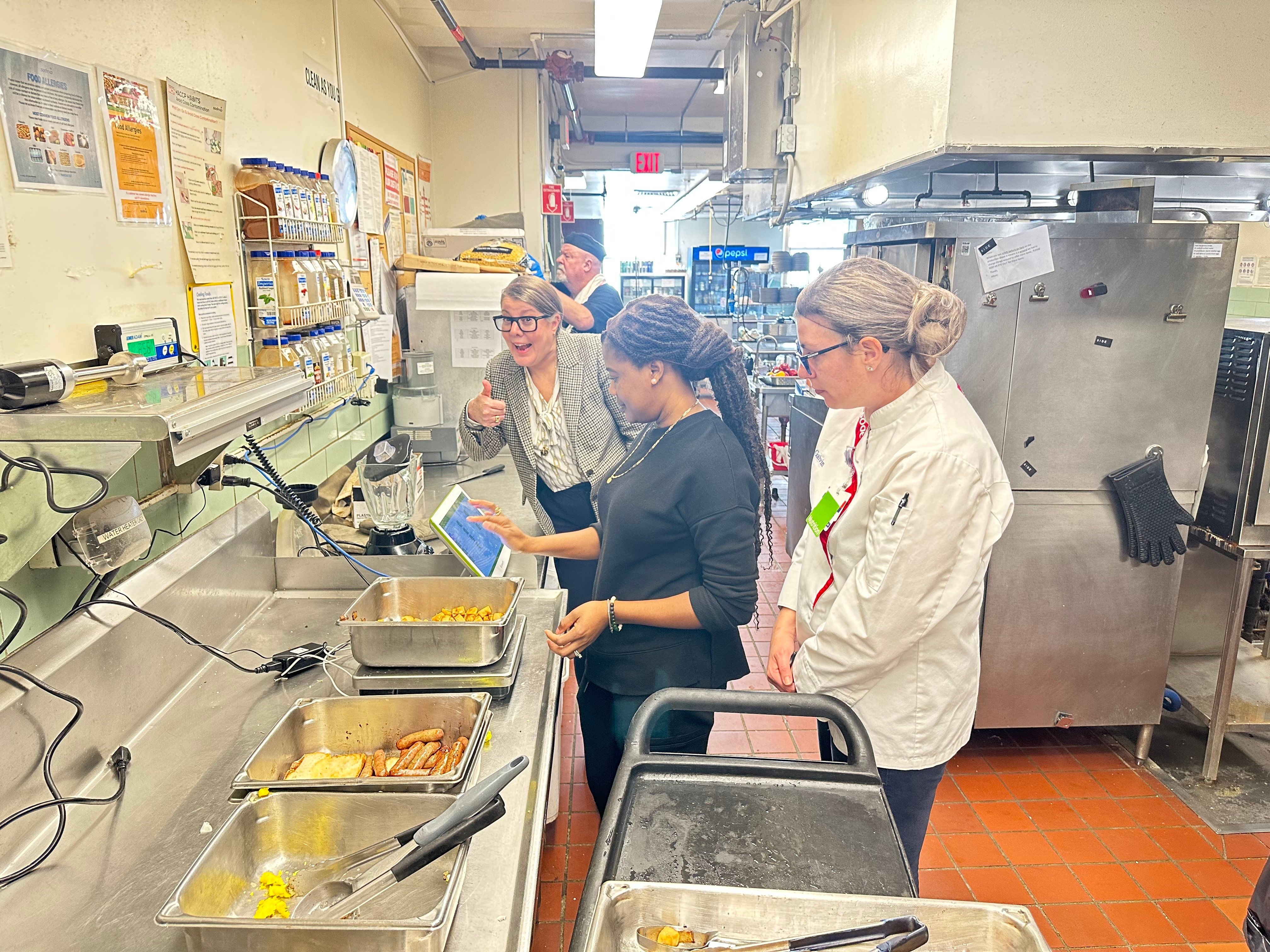
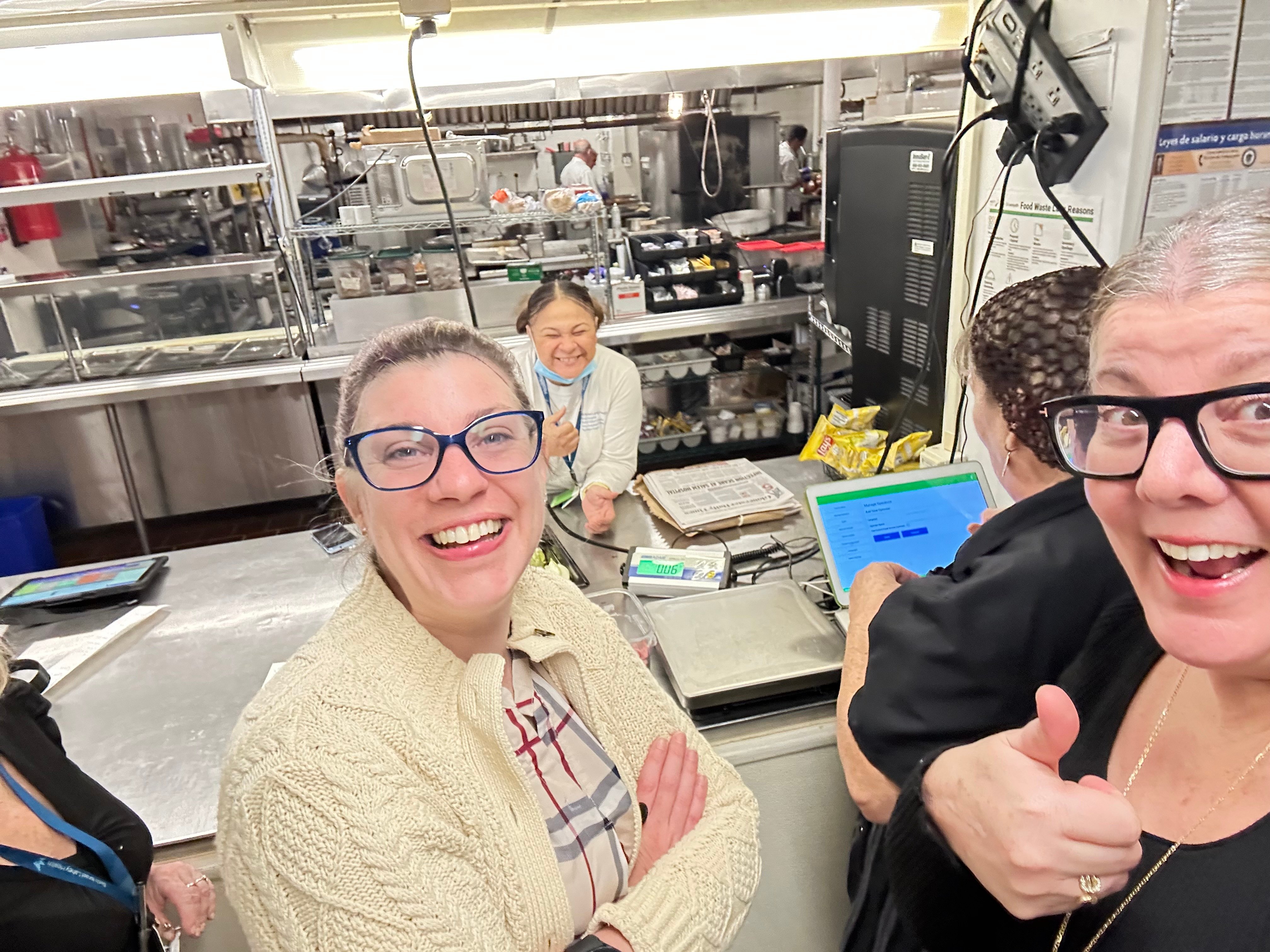
"Managers are training frontline team members, and frontline team members are training other managers. And they're having a good time," she says. Because a Leanpath transaction takes less than 12 seconds, training moves fast. Small groups rotate through, and depending on team size, a whole site can be trained in about an hour and capped off with a small celebration.
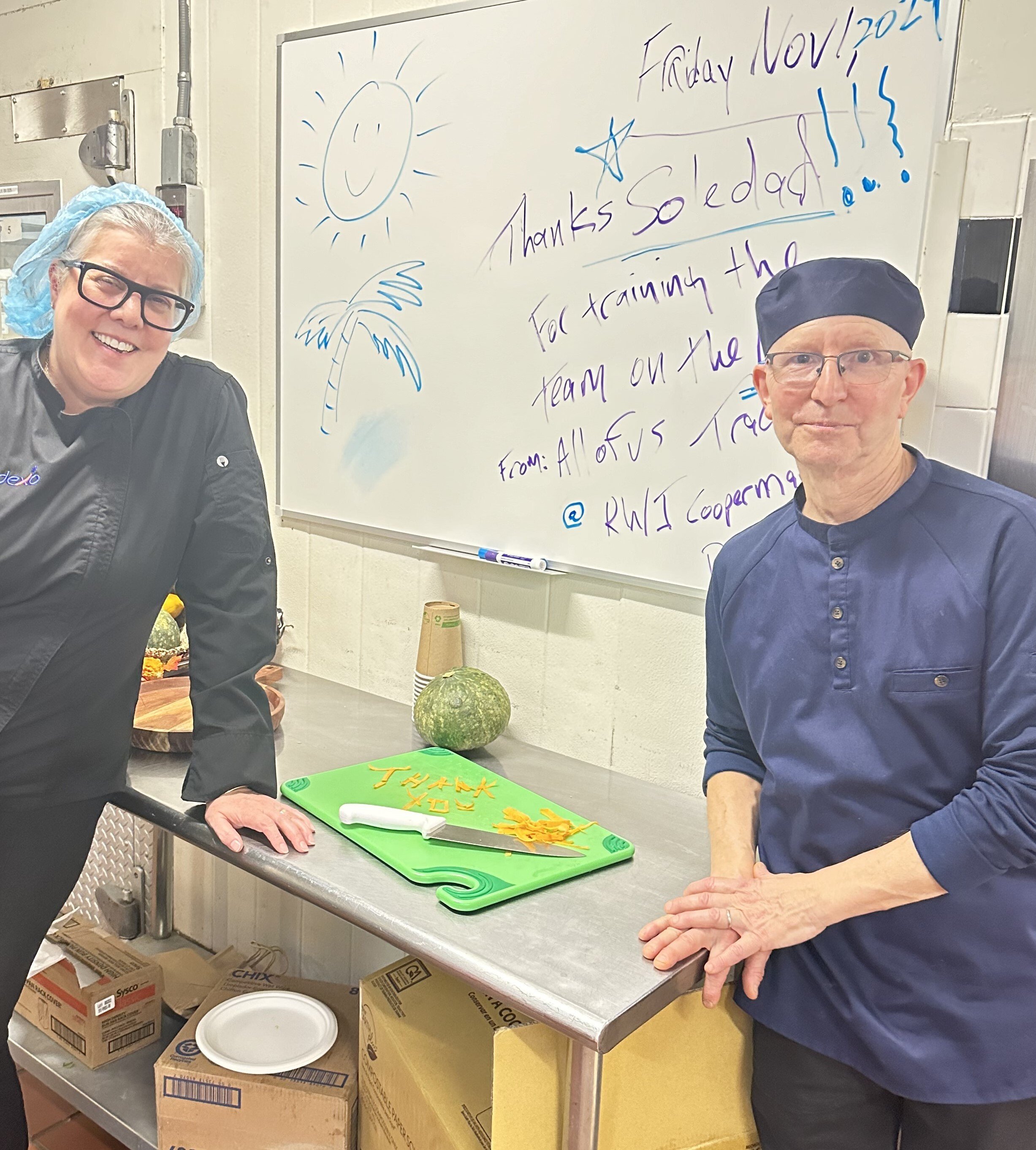
The model does double duty. Beyond building skills, it surfaces the people who naturally gravitate to the program. "They're the ones who don't want to leave the tracker. They're the ones who want to train other people," Soledad says. "Those become your super users, your waste warriors."
Best Practice #2: Celebrate Your Waste Warriors
Those waste warriors drive momentum at the site level, and Soledad makes sure they're recognized. They're celebrated in daily huddles (a KIND bar for the most transactions goes a long way), and their stories travel.
The enthusiasm is contagious across regions, too. When one team leader in Boston heard about the training approach, she asked Soledad to teach it to her. Then she rolled it out across her entire system of roughly 14 hospitals, and her sites now regularly take home recognition in Sodexo's internal awards.
"These people just trickle up," Soledad says. "You hear these stories, and you share out everything they're doing." Storytelling, she's found, gets other teams thinking and acting.
Best Practice #3: Accountability, Delivered Positively
Soledad's teams are trained to use "PAC" (positivity, engagement, and congratulatory tones) when talking about the program. But positive doesn't mean passive. She pairs encouragement with accountability: monthly regional calls that spotlight a different Leanpath Online feature, highlight high-performing sites, and name the waste warriors driving results.
She also emphasizes that the program is never finished. "It's not a stagnant program. It's not like when you achieve your 50 percent, that's it," she says. "After you're doing the tracking, then you get the reduction, and then you can go to donation, post-consumer, AI. There's a lot more to come."
The Results: From Tray Line Insight to Potential Six-Figure Savings
At one small site, a brand-new management team rebooted their Leanpath program in October, rallying around daily huddles with full buy-in from the GM, chef, and clinical nutrition managers. Within six months they cut pre-consumer waste by 50%, then expanded into post-consumer tracking, where, as Soledad puts it, "the magic really happened." In a single month, the site mitigated just over $16,000 in food waste. That's a run rate approaching $200,000 in possible mitigation over a year.
Another site drove waste below 3% of food purchases, beating ReFED's 4% benchmark, and cut raw material costs by roughly 9%.
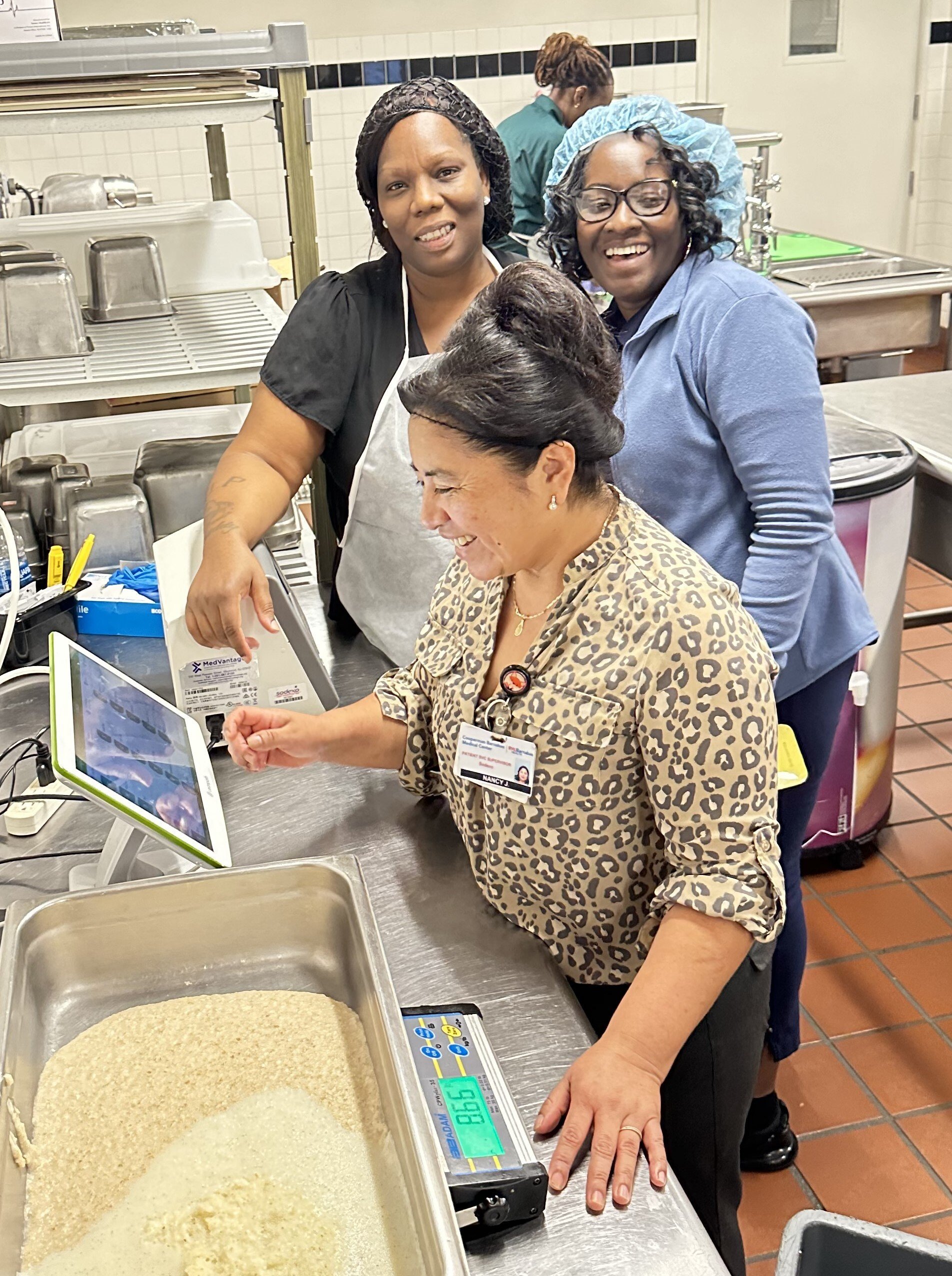
Then there's Soledad's favorite kind of win: the small operational insight with an outsized impact. At one hospital, team members noticed oranges consistently coming back untouched in tray line bins, even though patients had requested fresh fruit. The clinical nutrition manager got involved because she wanted patients to actually consume their nutrition intervention. By pairing waste data with patient experience feedback, the team found the culprit: the oranges were too big and too hard to peel for many older patients. A simple purchasing switch eliminated the waste entirely.
"That's what working with this program and looking at the data does," Soledad says.
Removing Friction with Technology
Soledad has also worked closely with Leanpath to make tracking itself as frictionless as possible by reducing the number of pan sizes, disposal options, and waste reasons on trackers to eliminate confusion. "You want to encourage tracking as much as possible, because that's the data that's actionable," she says. "If they're not tracking, you don't have actionable data to reduce it."
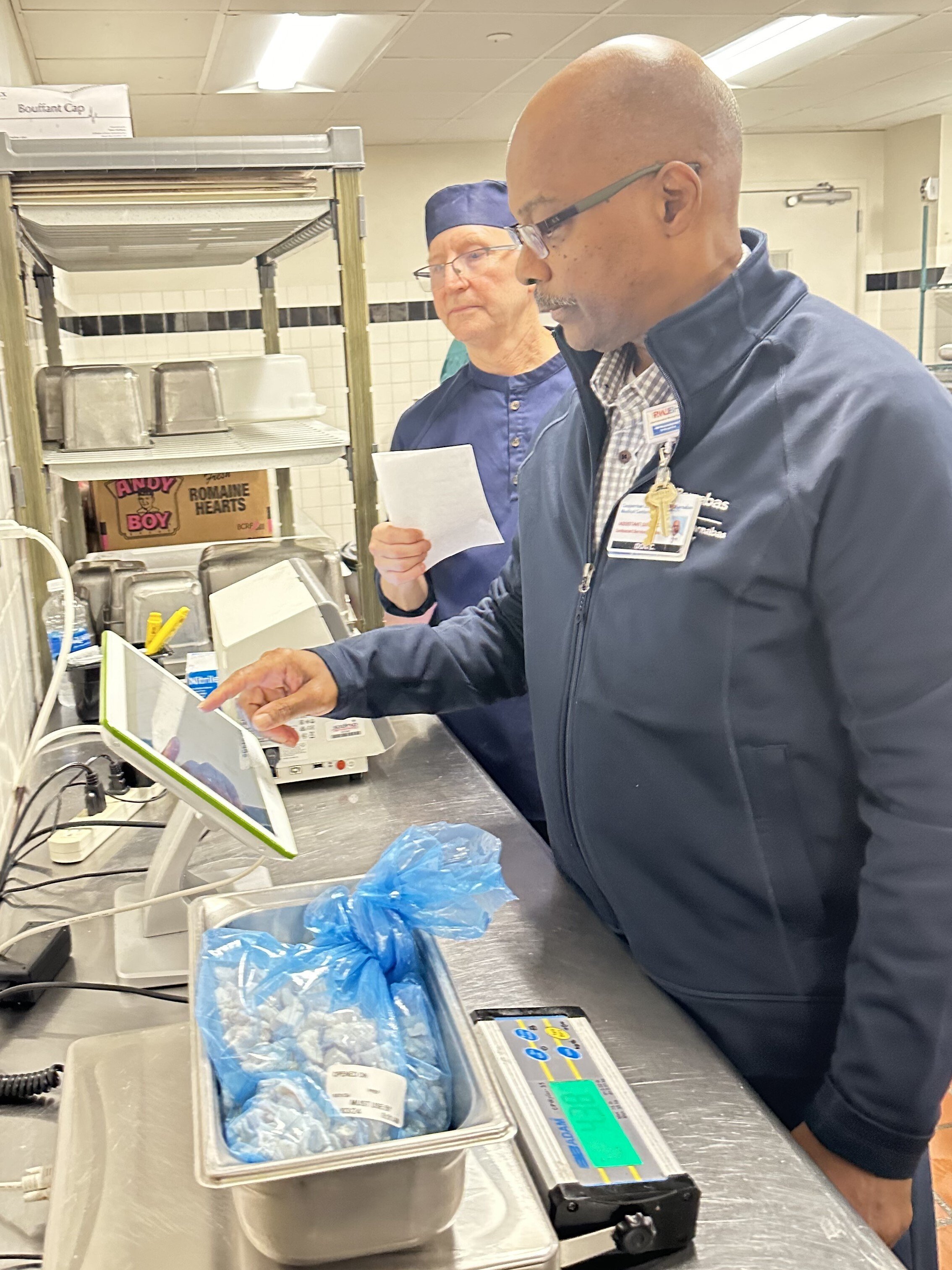
She's especially enthusiastic about Leanpath's AI-powered photo recognition. "Now there's more of a clear view of what's really happening. It can't say 'mixed patient meal' when you're seeing a bunch of chicken breasts in the picture," she says. And for busy team members clearing the tray line at the end of a shift, it's faster: "They're rushing. They're cleaning up the tray line, putting their post-production in, filling up a cart. Now they just take the picture, and they're done."
A Differentiator, Powered by People
For Soledad, Waste Watch Powered by Leanpath is a sustainability initiative and a competitive advantage rooted in culture.
"It really is a premier program for Sodexo. It's a differentiator for us," she says. "Other companies have some sort of food waste reduction program. But the vigor in how our teams are supporting this, that's the change maker."